HoReCa execution in FMCG: why a restaurant is not managed like a store
HoReCa execution requires a different logic from retail: agreed presence, menu/listing, equipment, delivery rhythm, relationship, stock availability and control over real consumption.
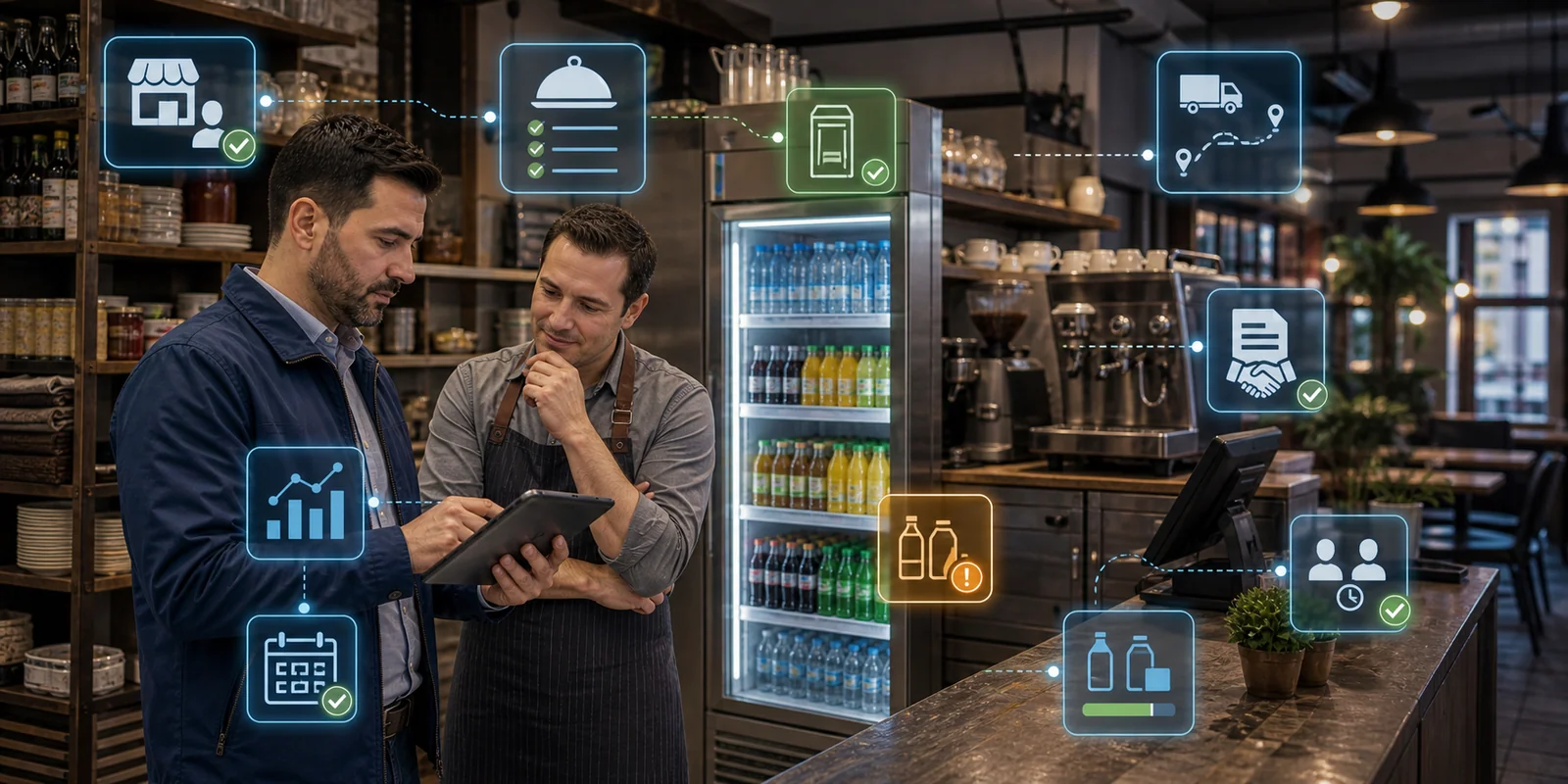
HoReCa is not a store with a different sign.
Restaurants, cafes, bars, hotels and foodservice outlets have a different logic from traditional retail.
In a store, the product sits on the shelf and the shopper chooses it directly. In HoReCa, the product often passes through a menu, waiter, bartender, kitchen, equipment, agreed terms, delivery schedule and relationship with the manager.
That is why HoReCa execution cannot be managed with the same checklist as a supermarket shelf.
It needs to be managed as channel-specific execution.
HoReCa has a different sales motion
In retail, the main question is often: is the product on the shelf?
In HoReCa, there are more questions:
- is the product listed in the menu;
- does staff know how to offer it;
- is there stock in the outlet;
- does equipment work;
- are agreed terms respected;
- is delivery rhythm reliable;
- are payments and credit controlled;
- is there competitor replacement;
- is the outlet active or only listed.
This makes HoReCa closer to relationship execution than a simple shelf audit.
Menu/listing is the equivalent of shelf presence
In many HoReCa categories, the menu is the shelf.
If the product is not in the menu, it is not visible to the customer. If it is in the menu but staff does not offer it, sell-out can still be weak.
The team should track:
- listed product;
- active menu presence;
- recommended/default option;
- visibility at bar or counter;
- staff awareness;
- seasonal menu changes;
- competitor substitution.
This is a different type of execution from Planogram compliance, but the principle is similar: the agreed standard must be compared with the real execution.
Equipment is part of the sale
In HoReCa, equipment can be critical:
- coolers;
- coffee machines;
- dispensers;
- bar equipment;
- branded racks;
- table/menu materials;
- POS devices;
- outdoor visibility.
Asset tracking and Cold equipment are especially important here, because equipment is not just an asset. It is often a condition for the sale.
If the cooler does not work, if the machine is broken or if branded equipment is used for a competitor product, the agreement does not create value.
Stock availability is less visible
In retail, lack of product is often visible on the shelf.
In HoReCa, it can be hidden:
- product is missing in outlet storage;
- product is not loaded at the bar;
- staff replaces it with a competitor;
- the menu shows it but it is not really offered;
- delivery is late;
- the outlet orders reactively instead of planning.
That is why AI Order Brain should use different signals: order history, consumption rhythm, delivery frequency, seasonality, event calendar, contract commitments and service model.
Route-to-market logic is different
HoReCa often uses different RTM models:
- direct delivery;
- distributor delivery;
- cash and carry;
- van sales;
- pre-sales;
- telesales;
- key account servicing;
- mixed model by region.
Van sales vs pre-sales matters because HoReCa customers can have unpredictable consumption, special delivery windows and strong relationship dependency.
If delivery rhythm is weak, even a good agreement may not produce results.
Outlet segmentation is mandatory
Not all HoReCa outlets are the same.
They should be segmented by:
- type: restaurant, cafe, bar, hotel, quick service, catering;
- potential;
- seasonality;
- location;
- customer traffic;
- agreed equipment;
- category relevance;
- credit risk;
- delivery complexity;
- strategic value.
Outlet segmentation defines visit frequency, assortment, equipment investment, service model and commercial attention.
An expensive service model for a low-potential outlet can increase cost-to-serve without creating real profit.
Contract compliance is not only legal
In HoReCa, there are often agreements:
- exclusivity;
- minimum purchase;
- equipment usage;
- menu presence;
- visibility materials;
- rebates;
- payment terms;
- seasonal commitments.
The agreement has value only if it is executed.
The team should measure:
- product bought/consumed;
- equipment used correctly;
- competitor replacement;
- outlet active status;
- visibility present;
- payment discipline;
- issue history.
Workflow orchestration should create action when a contract gap appears: visit, call, service ticket, key account escalation or distributor follow-up.
KPIs for HoReCa execution
A good HoReCa dashboard should show:
| KPI | Why it matters |
|---|---|
| Active outlets | listed does not mean active |
| Menu/listing compliance | whether product is visible to the customer |
| Order frequency | whether consumption is regular |
| Delivery reliability | whether the outlet can rely on supply |
| Equipment status | whether the asset works |
| Stock availability | whether product can be served |
| Contract compliance | whether the agreement is respected |
| Sales per outlet | real value |
| Cost-to-serve | whether the service model is economic |
| Issue closure | whether problems are closed in time |
These KPIs should not be mechanically mixed with retail shelf KPIs. HoReCa has its own execution logic.
AI and BI in HoReCa
AI can help with:
- churn risk;
- next-best-visit;
- recommended order;
- equipment maintenance risk;
- low-activity outlet alerts;
- contract compliance gaps;
- route priority;
- credit/payment risk;
- seasonal demand.
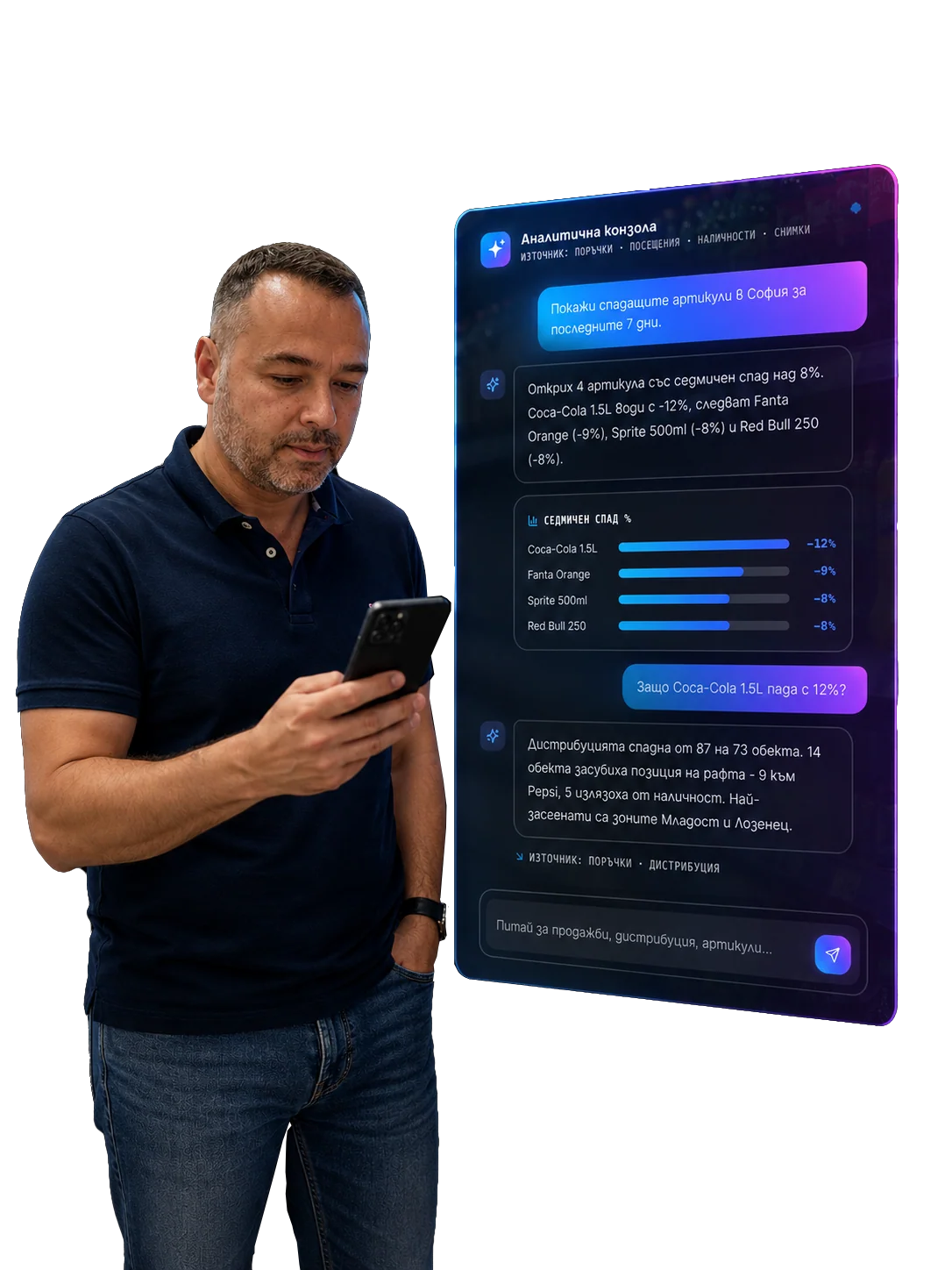
Chat BI can be useful for managers asking: “Which HoReCa outlets with equipment have not ordered in the last 30 days?” or “Where are delivery delays affecting consumption?”
In short
HoReCa execution is not retail execution in a different channel.
It is a separate operational logic:
- menu/listing;
- relationship;
- equipment;
- stock availability;
- delivery rhythm;
- contract compliance;
- outlet segmentation;
- cost-to-serve;
- issue management.
A restaurant is not won only with product.
It is won with reliable service, correct equipment, active agreement and fast reaction.
Related in Optimasoft
- OptimaSale manages HoReCa visits, tasks, orders and relationship history.
- OptimaDMS connects delivery, stock, invoices and distributor execution.
- Asset Validator checks equipment and outlet-level assets.
- AI Order Brain supports recommended orders based on consumption rhythm and delivery cycle.
- Route optimization optimizes visits and deliveries according to channel constraints.
- Cost-to-serve helps evaluate the economics of the HoReCa service model.
Sources
Related articles