Visit frequency in FMCG: when more visits do not mean more sales
More visits do not always mean better execution. The right frequency depends on potential, risk, promotion calendar, OSA, orders, cost-to-serve and whether the visit leads to real action.
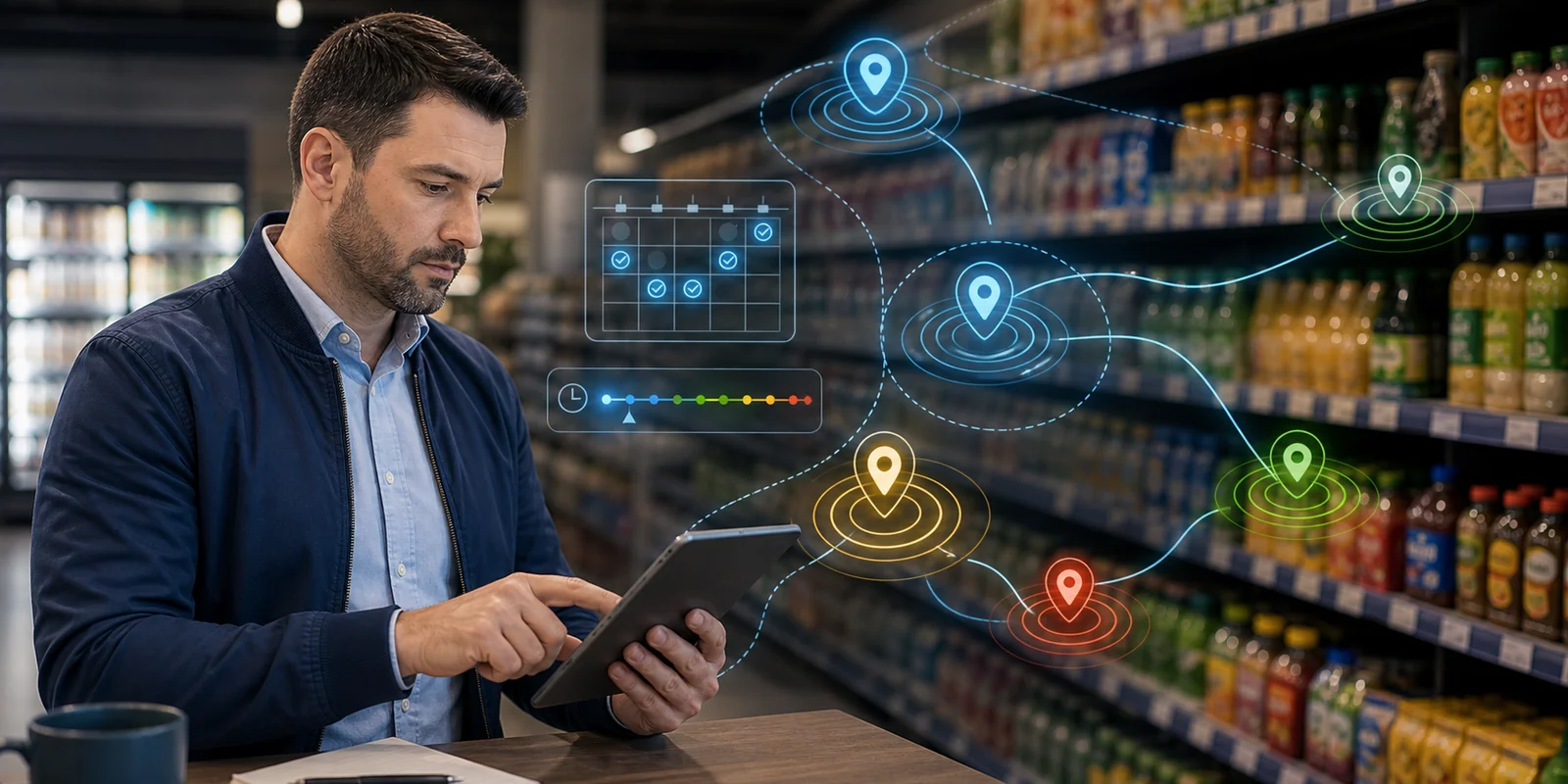
In FMCG, it is easy to assume that more visits mean more sales.
More control. More presence. More opportunities. More orders.
Sometimes this is true.
But not always.
More visits to the wrong outlets can increase cost, overload representatives and take time away from stores where risk or potential is real. The opposite is also true: visiting an important outlet too rarely can lead to out-of-stock, missed promotion and lost shelf share.
That is why visit frequency should not be a historical habit.
It should be a commercial decision.
How often should we visit this outlet to protect sales without spending more field time than its value justifies?
Historical frequency is dangerous
Many FMCG routes are inherited.
Outlets are visited weekly, every two weeks or monthly because that is how it has always been. New customers are added, some decline, promotions change, categories move, but frequency often stays the same.
This creates three problems.
1. Stable outlets are served too often
If the store has low risk, stable availability, regular order and few execution tasks, frequent physical visits can be expensive.
Maybe this outlet needs a lower frequency, remote check or only order cycle.
2. Risky outlets are visited too rarely
If the store has high potential, active promotion, OSA risk or new SKU, the regular base frequency may not be enough.
Temporary higher frequency can have direct effect there.
3. The representative loses priority
When every outlet has a "mandatory" visit, the day fills with activity, but not necessarily impact.
This is where field sales visit planning becomes key. The daily plan should reflect risk and potential, not only calendar.
Base frequency vs dynamic frequency
The right model is not chaotic.
It has two layers.
Base frequency
It comes from outlet segmentation:
- channel;
- potential;
- strategic role;
- size;
- cost-to-serve;
- customer behavior;
- service model.
Base frequency defines the normal cadence.
Dynamic frequency
It temporarily changes frequency based on signal:
- OSA risk;
- active promotion;
- new product;
- rejected recommended order;
- repeated issue;
- low Perfect Store score;
- asset problem;
- seasonal peak;
- customer complaint;
- route opportunity.
Then frequency is not fixed dogma. It is a managed mechanism.
When to increase frequency
There are cases where more visits are correct.
1. Before and during promotion
Promotion needs timing:
- pre-check before start;
- early execution check;
- replenishment check;
- closing check.
If the outlet is high-potential and the promotion is important, standard frequency may be insufficient.
2. When OSA risk rises
When image recognition or history shows that product runs out before the next visit, frequency should be reviewed.
This matters especially for:
- hero SKU;
- promotion SKU;
- seasonal products;
- high-margin products;
- products with frequent stock gaps.
3. During new product launch
Launch period requires more control:
- listing;
- shelf presence;
- first order;
- repeat order;
- visibility;
- customer objections;
- early OSA.
After stabilization, frequency can normalize.
4. With repeated issues
If the problem repeats, a temporary increase may be needed:
- supervisor visit;
- follow-up visit;
- trade marketing action;
- asset check;
- retraining.
But if the cause is supply or ERP, more visits by the representative will not solve it. In that case, frequency is not the solution.
When to reduce frequency
Reducing frequency does not mean abandoning the customer.
It means a smarter service model.
Physical visits can be reduced when:
- the outlet is stable;
- OSA is good;
- orders are predictable;
- promotions are rare;
- Perfect Store score is high;
- issues close quickly;
- the customer accepts remote communication;
- cost-to-serve is high compared to potential.
This frees time for outlets with higher impact.
Remote follow-up is not a downgrade
Not every task requires a physical visit.
Some things can be managed remotely:
- order confirmation;
- reminder for POSM;
- price follow-up;
- customer photo;
- supervisor call;
- delivery status check;
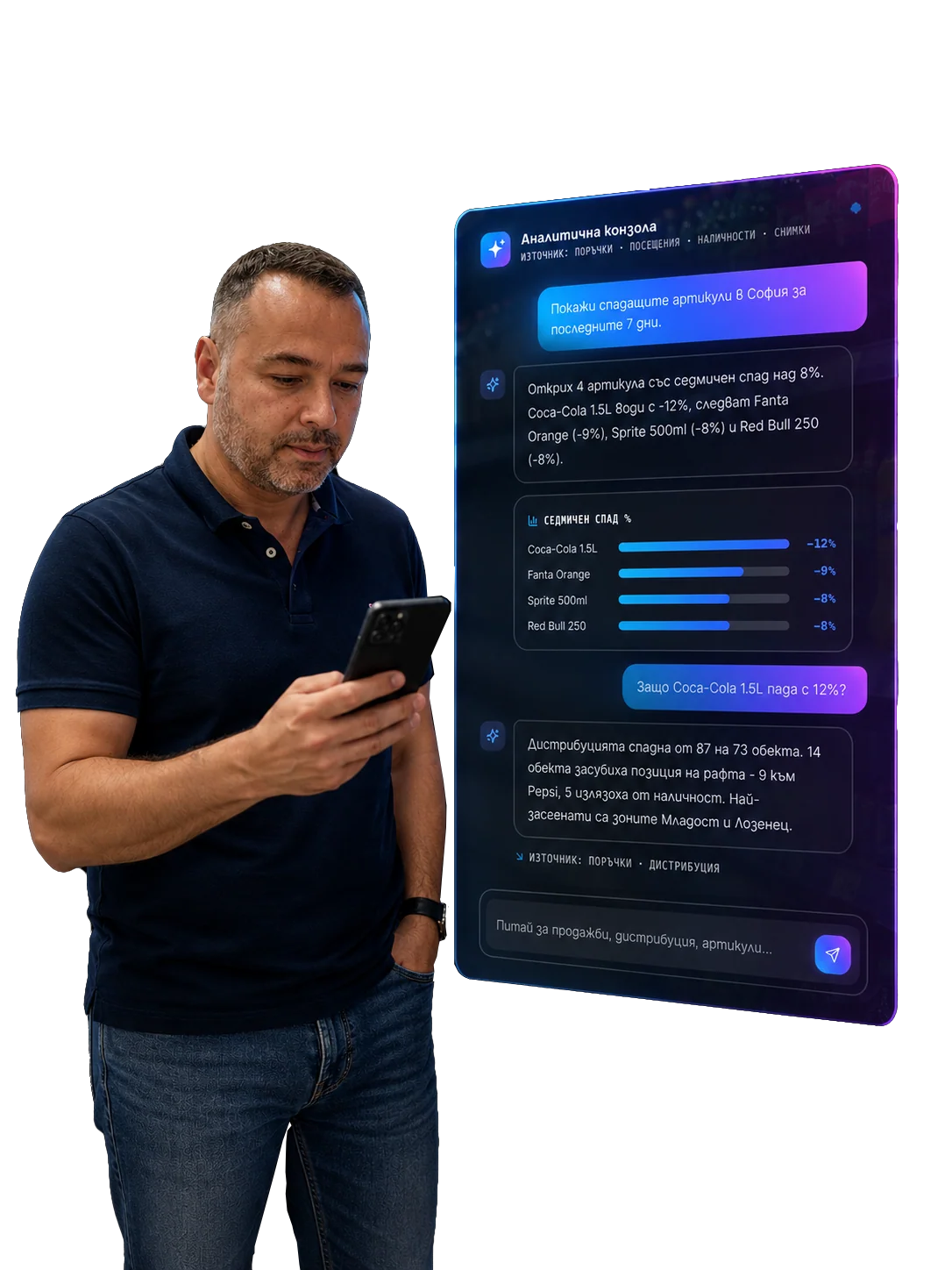
- Chat BI analysis;
- AI agent reminder.
Workflow orchestration and AI agents can reduce the need for physical visits when the task is follow-up, not real shelf intervention.
That is not lower quality. It is the right channel for the right task.
How to measure whether frequency is right
It is not enough to say "we increased visits".
The business needs to see whether this changed the result.
KPIs:
- OSA recovery;
- Perfect Store score improvement;
- promo compliance;
- order quality;
- recommended order acceptance;
- issue closure;
- sales per visit;
- cost-to-serve;
- missed critical visits;
- route productivity;
- admin time.
If frequency increases but these metrics do not improve, the company probably has more activity, not more execution.
Retail Execution KPI is the framework that should prove whether frequency works.
How AI helps
AI can turn visit frequency from a static schedule into an adaptive service model.
A good AI model can suggest:
- which outlets should receive an extra visit;
- which visits can move;
- where remote follow-up is enough;
- where OSA risk appears before the next visit;
- where promotion needs an early check;
- where route change reduces cost without reducing impact;
- where the representative needs coaching instead of more visits.
Route optimization becomes strong when it combines frequency, priority and constraints. AI Order Brain adds order risk. Image recognition adds shelf risk.
Then frequency becomes part of the full AI-assisted execution loop.
A practical frequency frame
A useful model:
| Outlet state | Frequency decision | Reason |
|---|---|---|
| High potential + high risk | temporarily higher | Missed-sales risk is high |
| High potential + stable | normal/medium | Control is needed, but not excessive |
| Low potential + stable | lower or remote | Physical time is expensive |
| Promo active | temporarily higher | Timing and execution are critical |
| New SKU launch | temporarily higher | Early stabilization is needed |
| Repeated issue | targeted follow-up | The problem must close |
| High cost-to-serve | optimize or remote | Sales must justify service cost |
Important: frequency should be variable, but governed. Not random.
Frequency management mistakes
Measuring representatives only by visit count
If the KPI is only visit count, the team will produce visits. Not necessarily sales impact.
Reducing frequency only for cost saving
If visits are reduced without looking at risk, the company may save cost and lose sales.
Increasing frequency without reason
More visits without clear action are expensive.
Not closing the feedback loop
If AI suggests a frequency change, the business should measure the result and correct the rules.
In short
Visit frequency in FMCG should not be a historical habit.
It should be an adaptive decision based on:
- potential;
- risk;
- channel;
- promotion calendar;
- OSA;
- order risk;
- customer behavior;
- cost-to-serve;
- open issues;
- opportunity for remote follow-up.
More visits are right only when they lead to better execution.
Fewer visits are right only when they do not increase risk.
The real goal is not to visit everyone equally.
The goal is to use the field team's time where it can change sales.
Related in Optimasoft
- Outlet segmentation is the foundation for correct base frequency.
- Route optimization helps frequency become a real daily route.
- Optimasale connects frequency, visits, tasks and orders in the field execution process.
- AI Order Brain provides order risk signals that can change frequency.
- Retail Execution KPI shows whether frequency actually improves the result.
Sources
Related articles