Cost-to-serve in FMCG: why revenue does not tell you whether a customer is profitable
A large customer is not always a profitable customer. If delivery cost, visit frequency, claims, discounts and small drops consume margin, the route-to-market model must change.
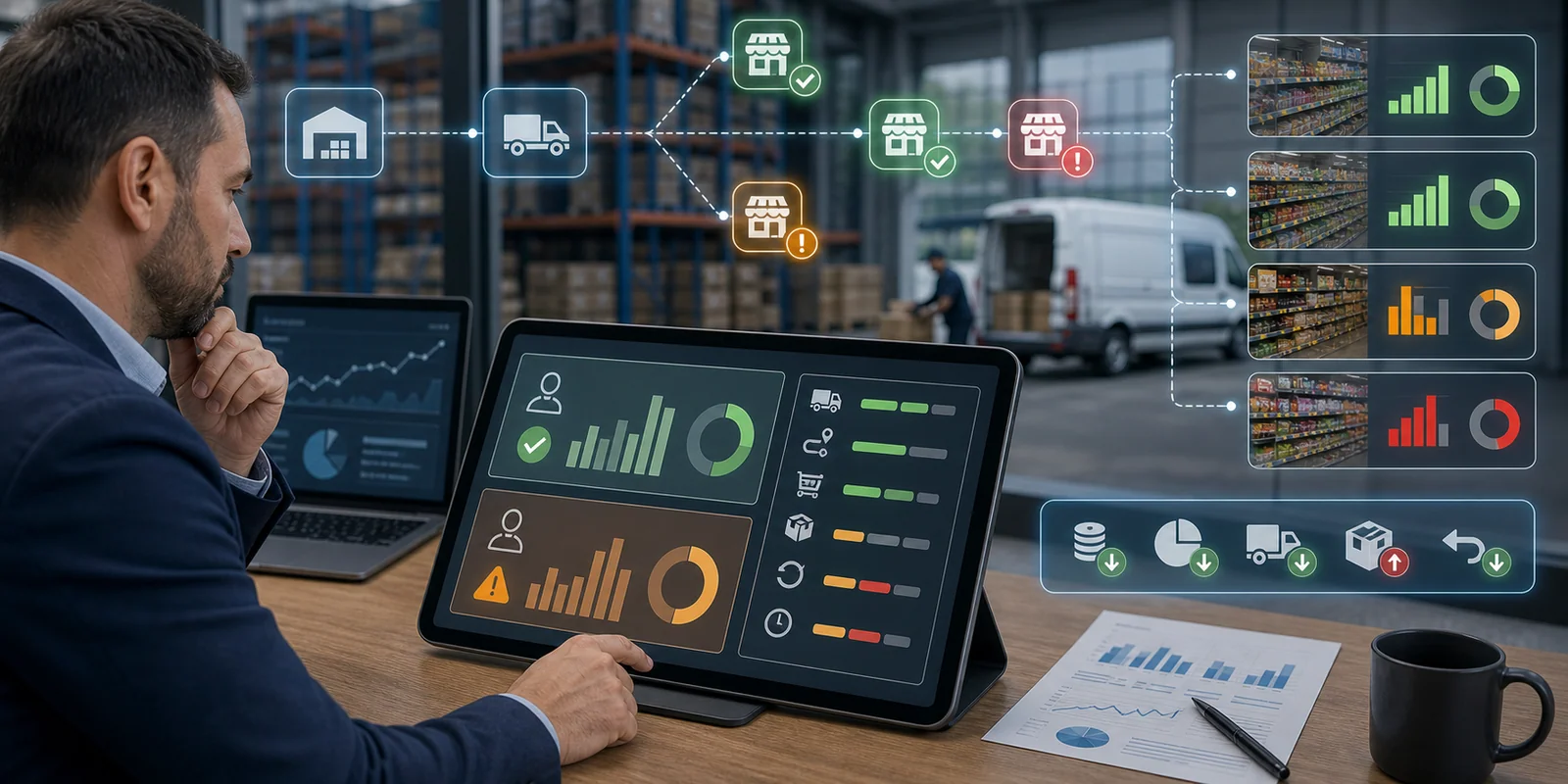
In FMCG, it is easy to look at revenue.
Which customer buys the most. Which region grows. Which distributor delivers the highest sell-in. Which route generates the most invoices.
But revenue does not tell you whether a customer is profitable.
One customer may have high revenue and weak margin because it requires frequent small deliveries, high discounts, many claims, special service, long credit and complex logistics.
Another customer may have lower revenue but be more profitable because it orders regularly, accepts delivery in convenient windows, has low returns and does not require an expensive service model.
This is why cost-to-serve is a critical KPI.
What is cost-to-serve
Cost-to-serve is the cost of serving a specific customer, channel, region, route or distributor.
It includes more than transport.
In FMCG, cost-to-serve may include:
- visit cost;
- delivery cost;
- picking and loading;
- warehouse handling;
- cash collection;
- credit management;
- claims and returns;
- discounts and trade terms;
- merchandising tasks;
- order processing;
- call center or telesales;
- route administration;
- failed delivery;
- small drop inefficiency.
If this cost is not visible, the company may grow revenue while losing profit.
A large customer does not always mean a good customer
Some customers look important because revenue is high.
But when full service cost is included, the picture can change.
For example, a high-revenue customer may:
- place small orders frequently;
- require special delivery windows;
- return a lot of goods;
- pay late;
- create many price disputes;
- require manual merchandising service;
- receive aggressive discounts;
- have low fill rate because of complex assortment.
This does not mean the customer is bad.
It means the service model needs to be managed.
What should be measured
Cost-to-serve should be viewed across several dimensions:
| Dimension | Why it matters |
|---|---|
| Customer | shows real customer profitability |
| Channel | compares traditional trade, modern trade, HoReCa |
| Route | shows route economics |
| Distributor | shows distributor efficiency |
| Category/SKU | shows complexity and handling cost |
| Order | shows drop size and processing cost |
| Delivery | shows logistics cost |
| Claim | reveals hidden operational losses |
Without these cuts, cost-to-serve remains a general finance report.
Drop size is a key signal
Small orders can be very expensive.
If a sales rep visits a customer, captures a small order, the warehouse prepares it, the delivery vehicle delivers it and finance tracks payment, the cost may be too high compared with margin.
This does not mean small customers should be ignored.
It means the service model should adapt:
- lower visit frequency;
- telesales;
- self-service ordering;
- minimum order quantity;
- combined delivery;
- van sales instead of pre-sales;
- distributor-led servicing;
- different assortment.
Visit frequency should not be decided by habit. It should account for potential and cost-to-serve.
Route cost is more than fuel
A route has cost:
- sales rep time;
- driver time;
- fuel;
- vehicle cost;
- loading and unloading;
- opportunity cost;
- missed visits;
- admin work;
- overtime;
- failed delivery.
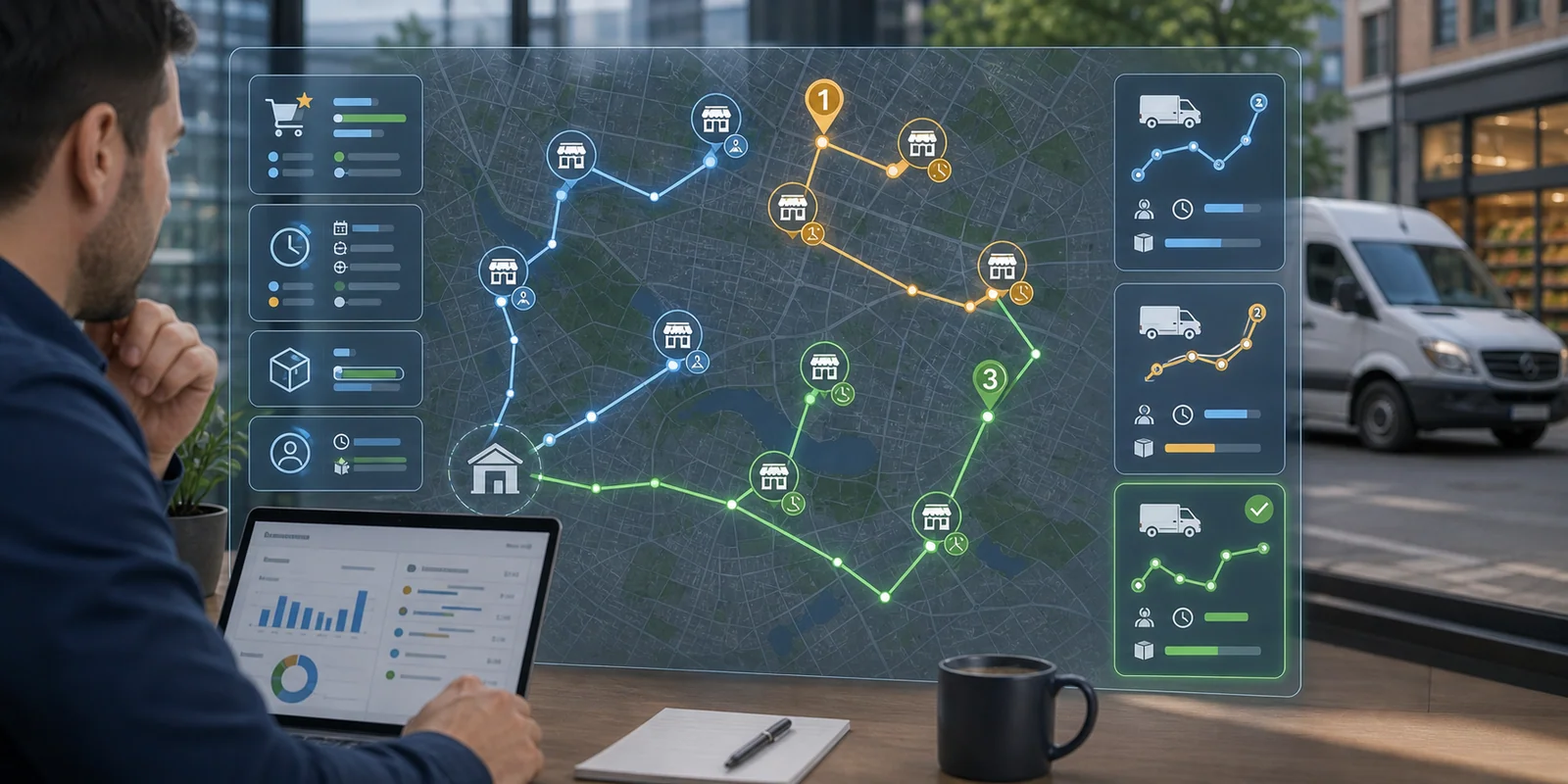
Route optimization should account for these costs, not only kilometers. The shortest route may be weak if it serves low-value customers and misses high-potential outlets.
Claims and returns consume margin
Claims are often underestimated.
But every wrong delivery, damaged product, expired product, price dispute or credit note has cost:
- processing time;
- transport;
- warehouse work;
- finance control;
- dispute management;
- lost trust;
- possible lost sale.
DMS for FMCG should measure claims not only as documents, but as cost-to-serve signals.
If a customer has high revenue and constantly high claims, profitability should be checked.
Cost-to-serve and segmentation
Good Outlet segmentation does not look only at potential.
It should look at:
- revenue potential;
- margin;
- cost-to-serve;
- service complexity;
- strategic importance;
- growth opportunity;
- execution risk.
One customer may be high-potential and high-cost. The goal is not to exclude it, but to improve the service model.
Another customer may be low-potential and high-cost. There, visit frequency, service channel or minimum order policy should be reconsidered.
AI can help with profitability signals
AI should not optimize only sales volume.
It should help with:
- customer profitability prediction;
- next-best-service model;
- route cost forecasting;
- low-margin customer alerts;
- claim anomaly detection;
- recommended order with minimum profitable drop;
- delivery consolidation;
- visit frequency recommendation.
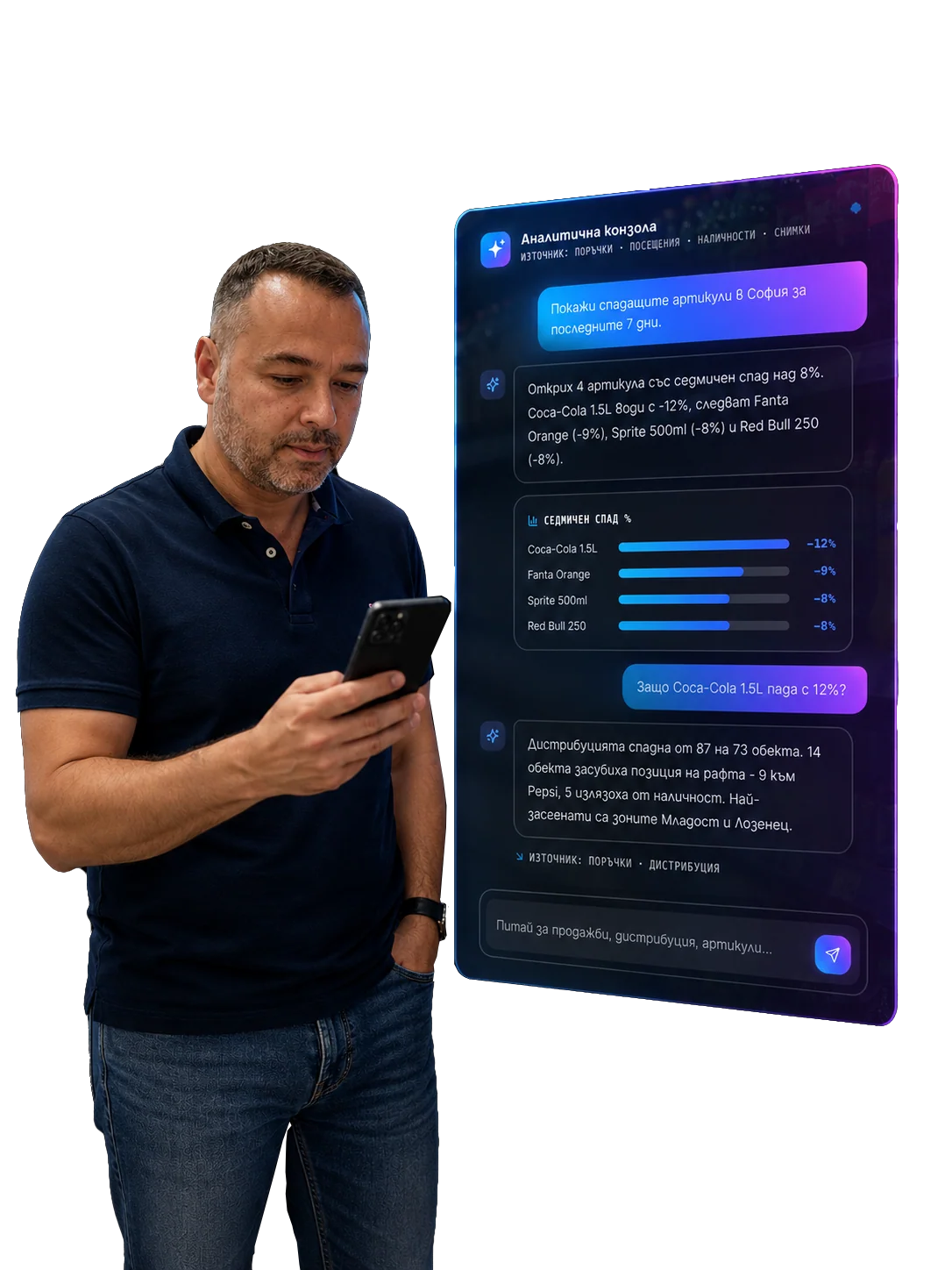
AI Order Brain can consider not only what the customer is likely to buy, but whether the order makes sense relative to service cost. Chat BI can support fast analysis: “Which customers have high revenue but low margin after delivery and claims cost?”
What to change when cost-to-serve is high
High cost-to-serve does not automatically mean stopping service.
Possible actions:
- change visit frequency;
- minimum drop size;
- combine deliveries;
- move to telesales or self-service;
- change route;
- renegotiate delivery windows;
- reduce claims through better picking;
- improve assortment planning;
- adjust trade terms;
- use distributor model instead of direct servicing.
This is where Route-to-market in FMCG becomes a practical strategy, not a presentation.
In short
Cost-to-serve reveals the true economics of the customer.
Revenue says how much we sell.
Cost-to-serve says how much it costs to sell, deliver, collect, service and correct that sale.
For FMCG, this is critical because the route-to-market model can look successful on top line, but weak on profit.
The right approach is:
- profitability by customer and channel;
- route cost;
- drop size;
- claims and returns;
- visit frequency;
- delivery complexity;
- segmentation;
- AI and BI on operational cost data.
When cost-to-serve becomes visible, RTM decisions become much more accurate.
Related in Optimasoft
- DMS for FMCG shows how operational data becomes the foundation for cost-to-serve analysis.
- Route optimization helps reduce route and delivery cost.
- Outlet segmentation should include service cost, not only potential.
- Visit frequency is one of the strongest levers for cost-to-serve.
- Distributor management adds distributor efficiency and secondary sales visibility.
- Chat BI enables fast customer profitability and route economics analysis.
Sources
Related articles