Van sales vs pre-sales in FMCG: which model works better and when
Van sales and pre-sales are not just two ways to take an order. They are different route-to-market models with different logic for availability, delivery, cash, cost and control.
Van sales and pre-sales are often discussed as an operational choice.
“Should we sell from the van or take the order in advance?”
But this is not just a process decision. It is a route-to-market decision.
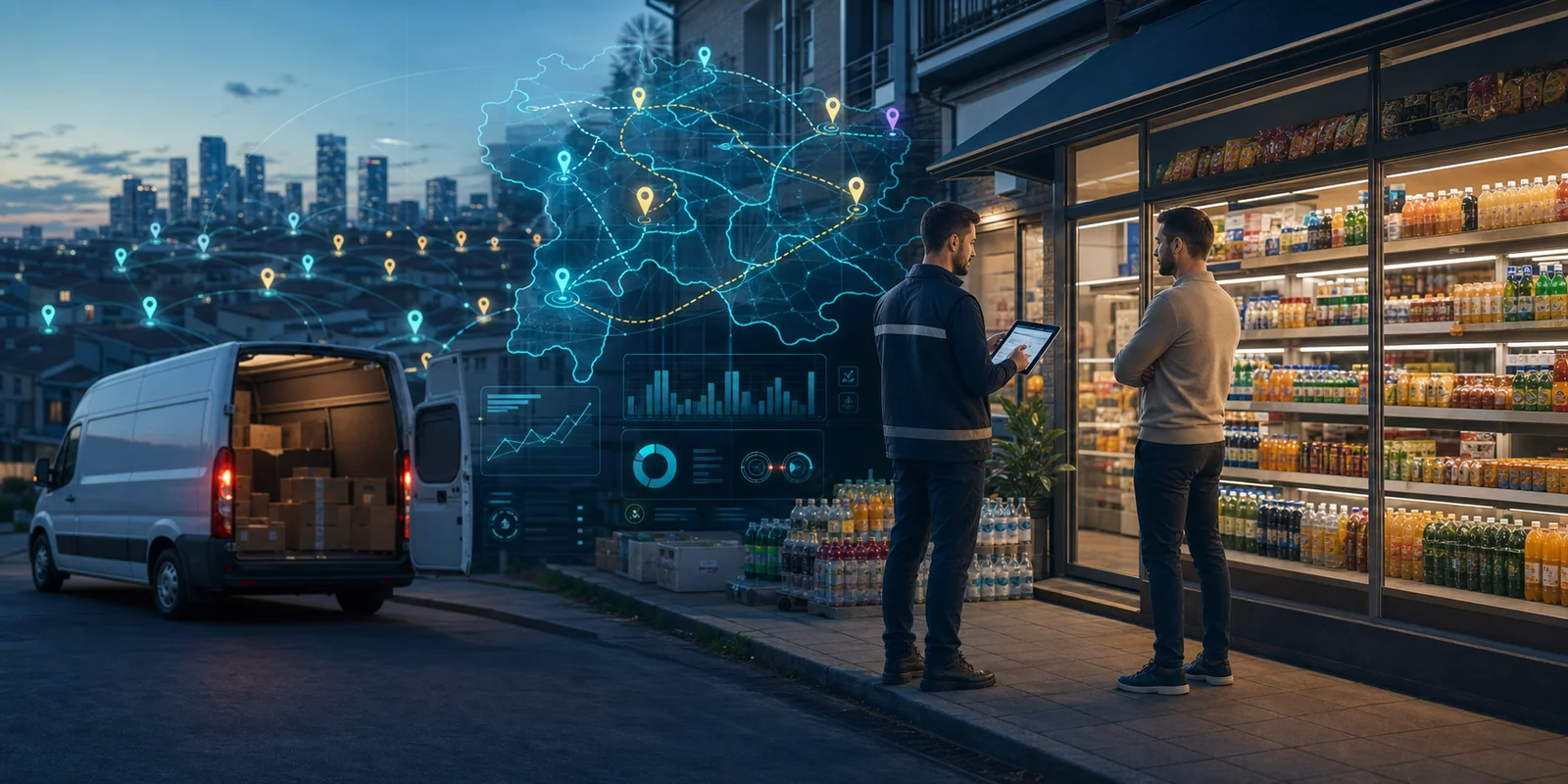
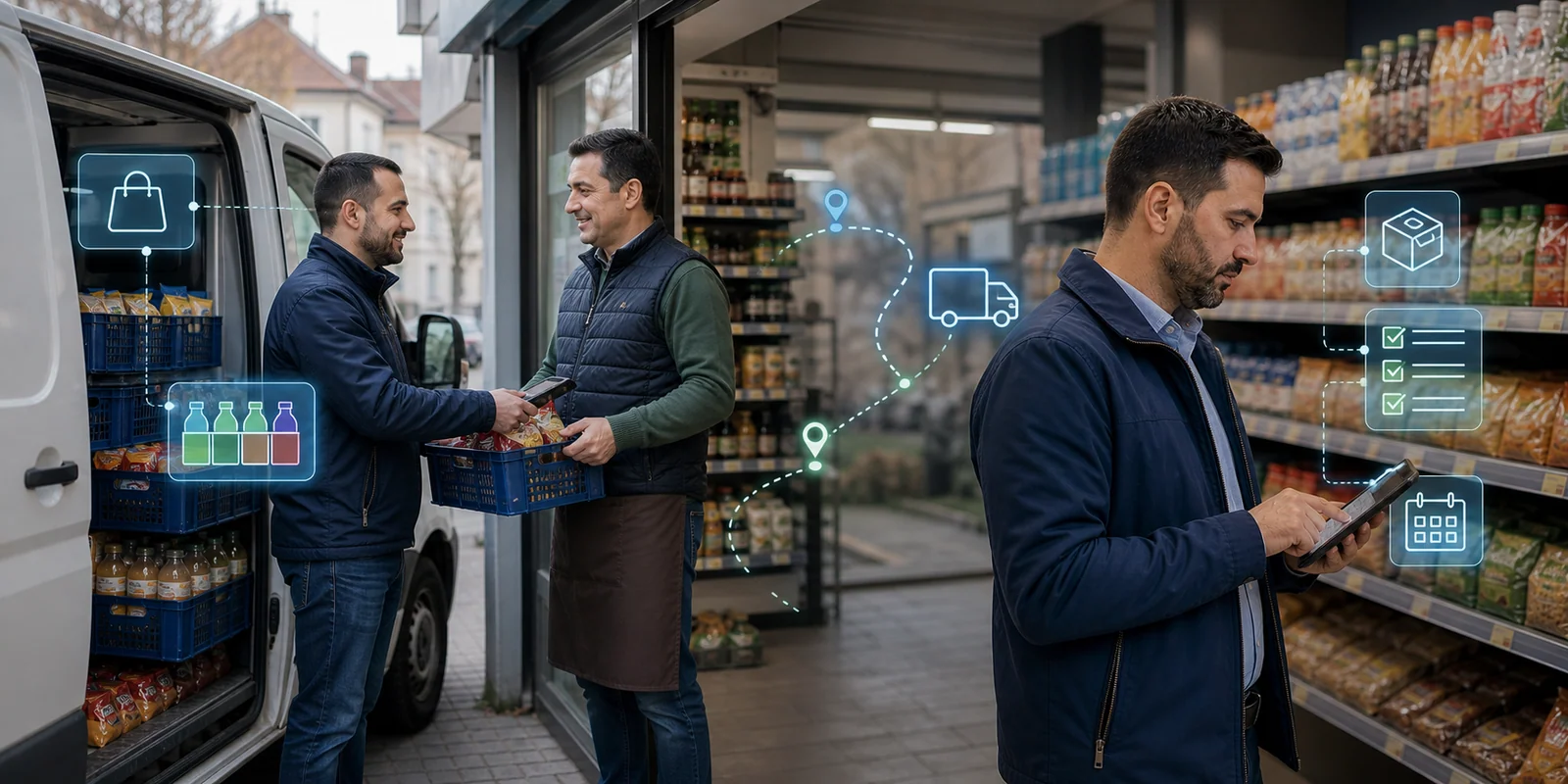
Van sales means the sales rep carries stock, sells and delivers during the same visit.
Pre-sales means the sales rep takes the order, and delivery happens later through a separate delivery process.
Both models can be strong. Both can become expensive if used in the wrong channel.
The question is not which model is “better”. The question is which model fits the market, channel, category and customer segment.
How van sales works
In van sales, the sales rep is also a delivery rep and often a cash collector.
They visit the store with stock in the vehicle. The customer chooses, the rep sells, delivers, invoices and sometimes collects payment on the spot.
This model is strong when:
- stores are small;
- orders are impulsive;
- customers have weak ordering discipline;
- cash collection matters;
- delivery must happen immediately;
- the SKU portfolio is relatively limited;
- route density is high;
- the back-office process needs to stay simple.
Van sales is especially useful in fragmented traditional trade, where the customer may not have a stable ordering rhythm and immediate availability matters more than planning.
How pre-sales works
In pre-sales, the sales rep does not carry goods for immediate delivery.
They visit the customer, check the shelf, take the order, discuss promotion, verify execution, and delivery is planned separately.
This model is strong when:
- orders are larger;
- the SKU portfolio is more complex;
- delivery should be optimized separately;
- warehouse stock is centralized;
- credit rules are important;
- customers have regular delivery windows;
- merchandising and sales tasks are separated;
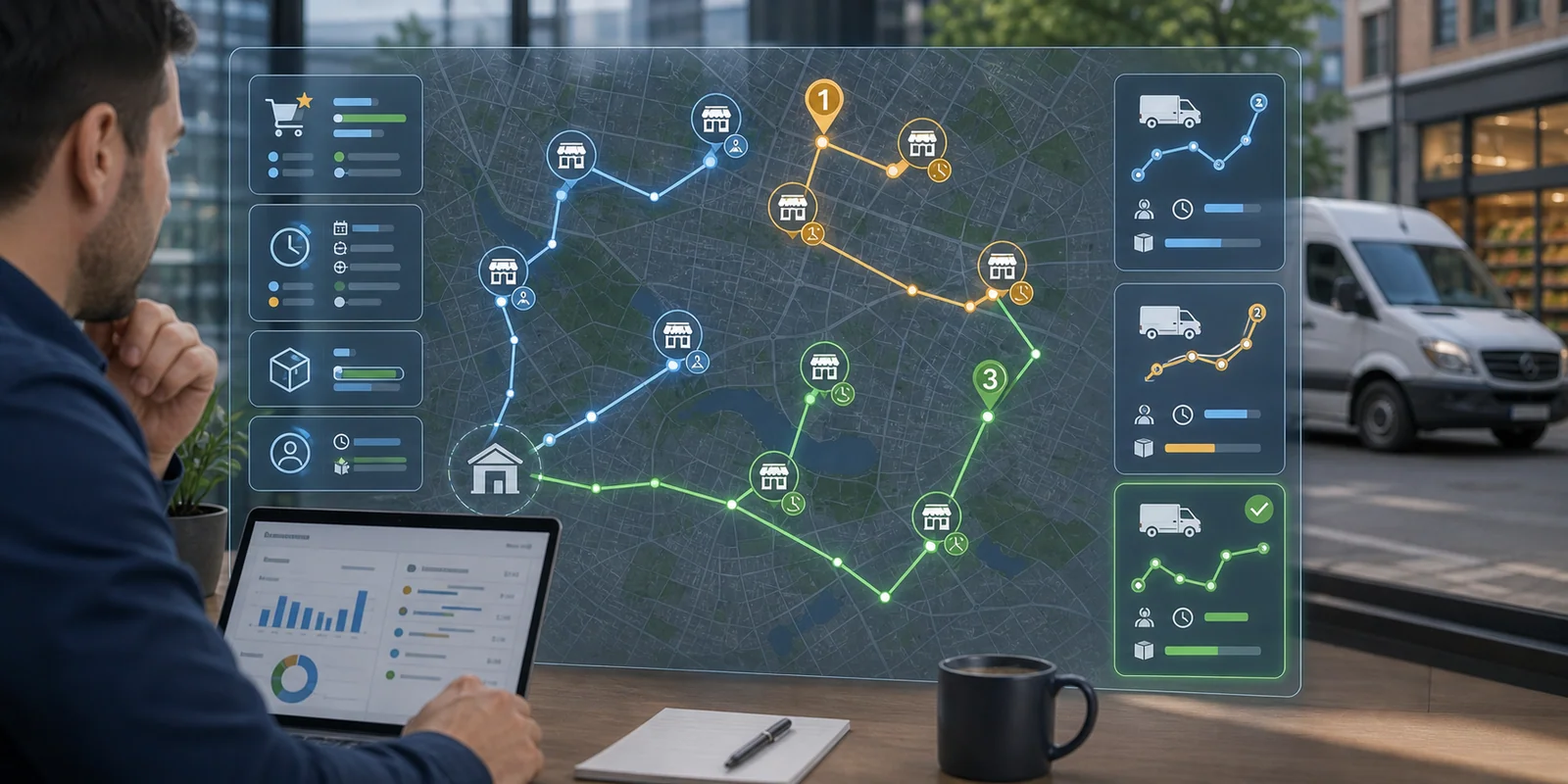
- route planning needs to reduce logistics cost.
Pre-sales enables better planning of load, warehouse, routes and delivery capacity. But it requires better data and stricter execution.
The main difference: availability versus planning
Van sales wins with immediacy.
The customer sees the goods, buys them and receives them immediately. This reduces the risk of “I ordered, but it did not arrive” and is convenient for small stores.
Pre-sales wins with planning.
The order enters the system in advance, the delivery route is optimized, the warehouse knows what to prepare, and the company can control availability, credit, pricing and promotion fulfillment more effectively.
| Question | Van sales | Pre-sales |
|---|---|---|
| Delivery | immediate | after the order |
| Stock | in the vehicle | warehouse or distributor |
| Planning | more limited | stronger |
| Cash collection | often on the spot | depends on customer |
| SKU complexity | lower | higher |
| Route optimization | harder | stronger |
| Customer type | small and impulsive stores | more structured customers |
| Risk | stock in van, van stockouts | delivery delay, order-to-delivery gap |
When van sales is more suitable
Van sales is a good choice when speed-to-shelf matters more than perfect planning.
For example:
- small stores with fast turnover;
- categories with limited SKU range;
- markets with low order discipline;
- customers who pay on the spot;
- channels where delivery after 24-48 hours loses the sale;
- dense territories with short routes.
But van sales has a cost.
The company must manage:
- stock in van;
- loading logic;
- returns;
- cash risk;
- expired goods;
- route productivity;
- lost sales when the rep does not have the right SKU in the van.
This is where OptimaDMS and OptimaSale need to work together: vehicle inventory, invoicing, payments, route execution and customer history.
When pre-sales is more suitable
Pre-sales is a good choice when scale, assortment and delivery efficiency matter more.
For example:
- larger stores;
- wider SKU portfolio;
- weekly delivery windows;
- credit customers;
- complex promotions;
- need for a separate merchandising process;
- load and route optimization.
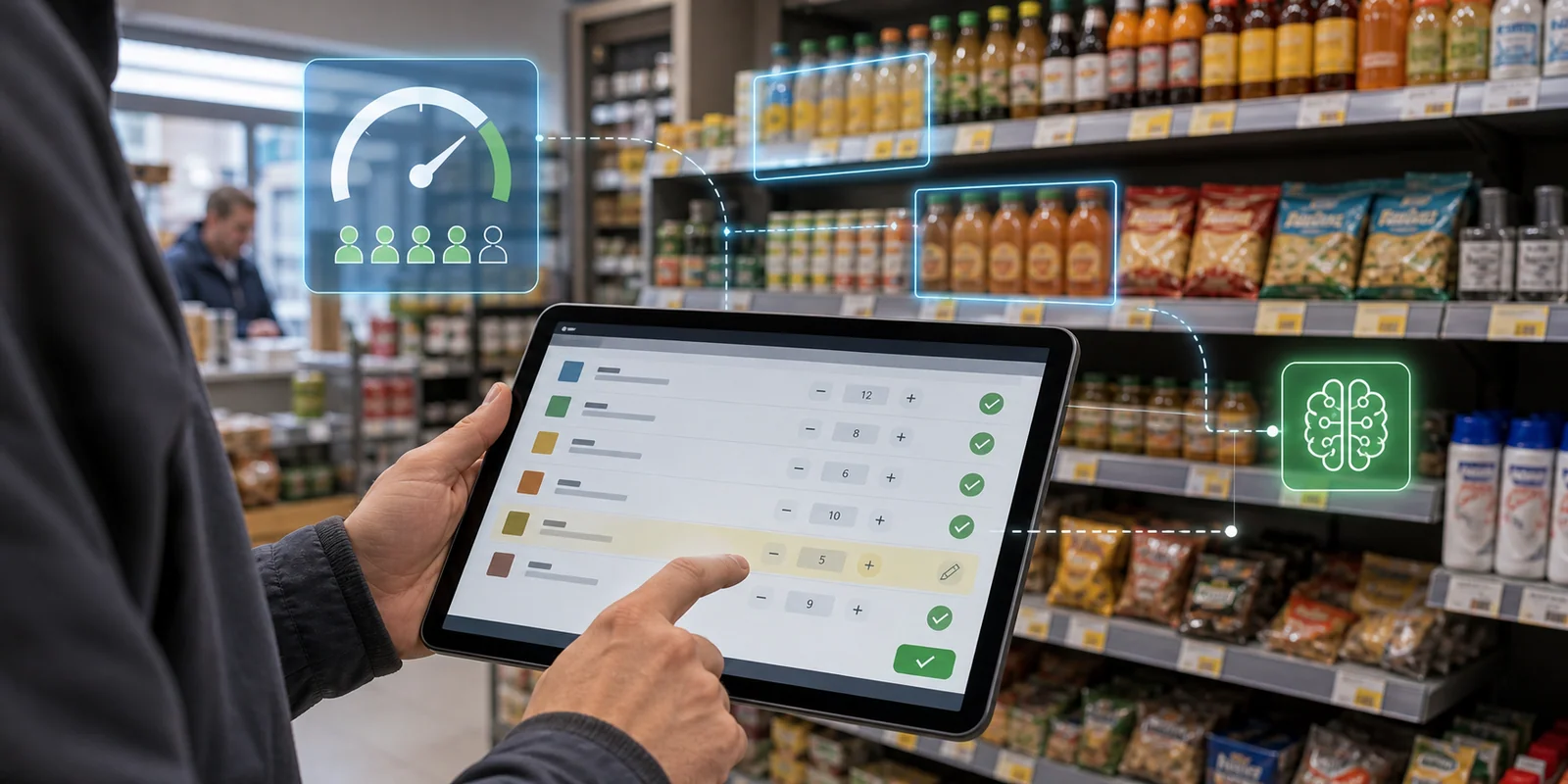
Pre-sales enables a more accurate recommended order, because the system can use sales, stock, shelf execution, route schedule and delivery capacity.
The risk is the gap between order and delivery.
If delivery is late, if the warehouse does not have product or if the customer need changes, the pre-sales process can lose trust.
A hybrid model is often most realistic
Many FMCG companies should not choose only one model.
A better approach is often hybrid RTM:
- van sales for small traditional trade customers;
- pre-sales for structured retail;
- telesales or self-service for low-priority customers;
- merchandising visits without order for key stores;
- distributor-led delivery for specific regions.
This requires good Outlet segmentation. If all customers are treated the same way, route-to-market becomes expensive and inefficient.
KPIs to track
For van sales:
- sales per route;
- drop size;
- van stock accuracy;
- out-of-stock in van;
- returns;
- cash collected;
- invoice time;
- route productivity;
- unsold inventory.
For pre-sales:
- order fill rate;
- delivery on time;
- order-to-delivery time;
- suggested order acceptance;
- manual order corrections;
- missed delivery;
- service level;
- cost per delivery;
- execution compliance.
Both models need cost-to-serve visibility. A model can look strong on revenue, but weak on margin if route cost, return cost and delivery inefficiency are high.
AI helps differently in each model
In van sales, AI should help with:
- what to load into the van;
- which SKU is most likely to sell;
- which customers have missed-sale risk;
- which route will use stock most effectively;
- which products have return risk.
In pre-sales, AI should help with:
- recommended order;
- delivery capacity;
- route planning;
- demand forecast;
- promo uplift;
- OOS risk;
- shelf execution signal.
AI Order Brain has a different role in each scenario. In van sales, it can help before the route with van loading. In pre-sales, it helps during recommended order creation and execution.
In short
Van sales is strong when immediate availability, cash collection and a simple process matter most.
Pre-sales is strong when planning, assortment, delivery efficiency and control matter most.
The right decision depends on:
- channel;
- store segment;
- route density;
- SKU complexity;
- cash model;
- delivery capacity;
- cost-to-serve;
- execution maturity.
The best FMCG route-to-market model is rarely universal.
It is segmented.
Related in Optimasoft
- Route-to-market in FMCG places van sales and pre-sales in a wider RTM context.
- OptimaSale manages field sales, visits, orders and execution.
- OptimaDMS supports distribution, inventory and delivery processes.
- AI Order Brain supports recommended orders and van loading logic.
- Route optimization helps manage route productivity and delivery efficiency.
- Outlet segmentation shows why different customers need different RTM approaches.
Sources
Related articles