Route optimization in FMCG: why the shortest route is not the best route
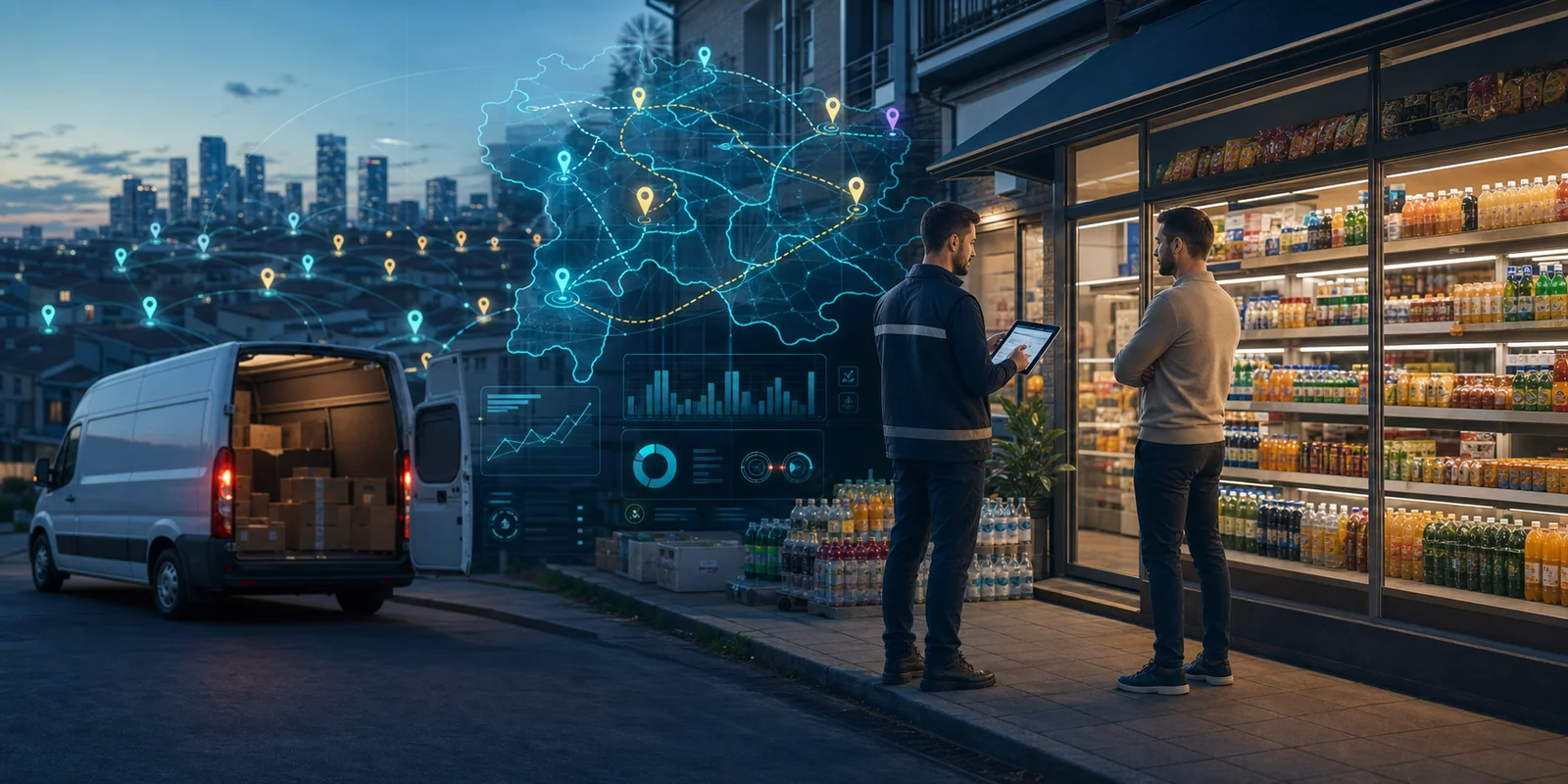
In FMCG, routes are not optimized only by distance. They must balance visit priority, time windows, delivery capacity, order value, service time and execution impact.
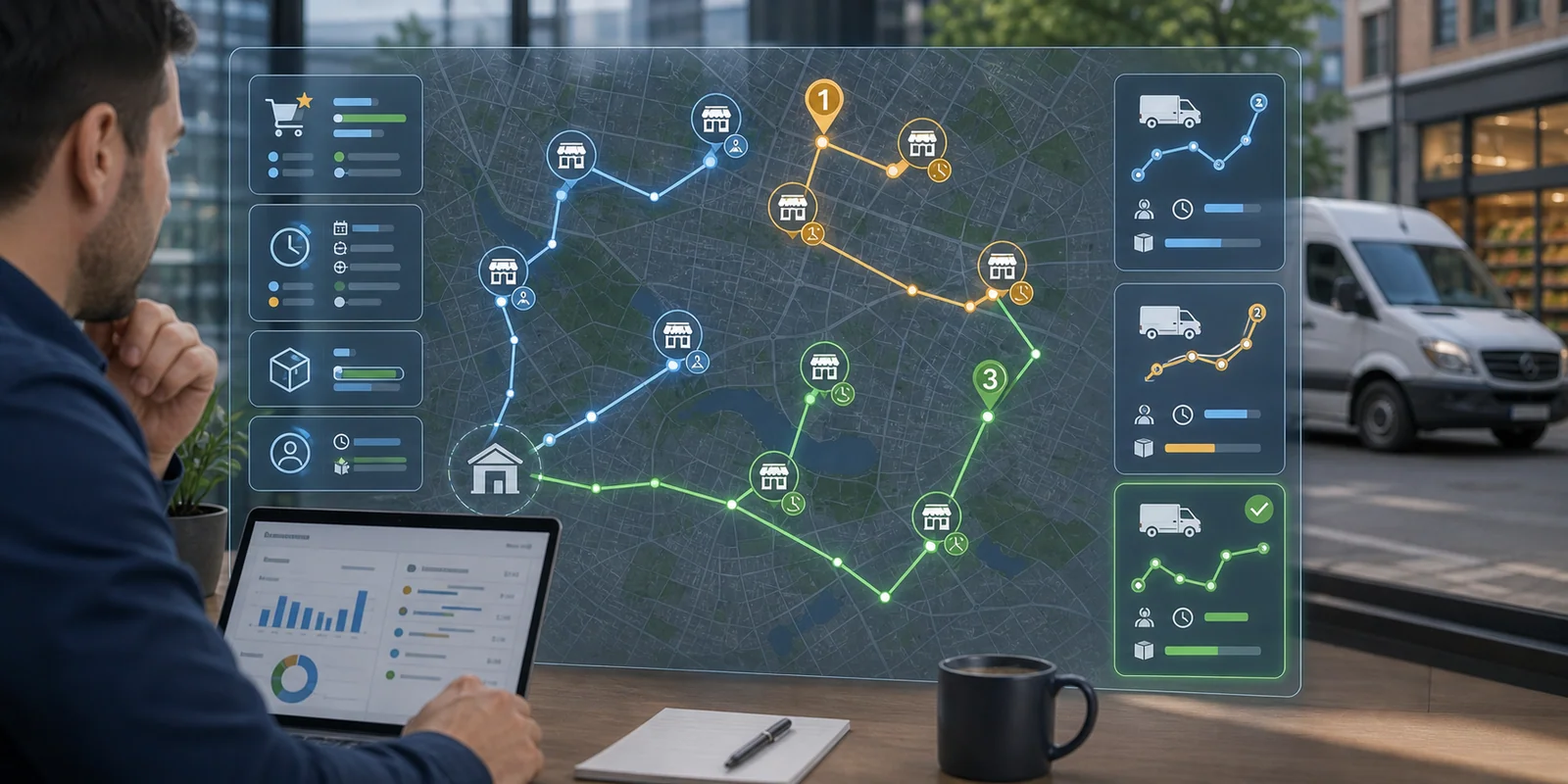
Route optimization is often understood as “find the shortest path”.
That is a dangerous simplification.
In FMCG, the shortest route can be a bad route.
It can skip an important customer, violate a delivery window, visit a store before it opens, leave the sales rep with no time for a key promotion or reduce revenue in the name of fewer kilometers.
Real route optimization does not optimize only distance.
It optimizes business outcome.
Why shortest path is not enough
If the route were only a logistics puzzle, kilometers and travel time would be enough.
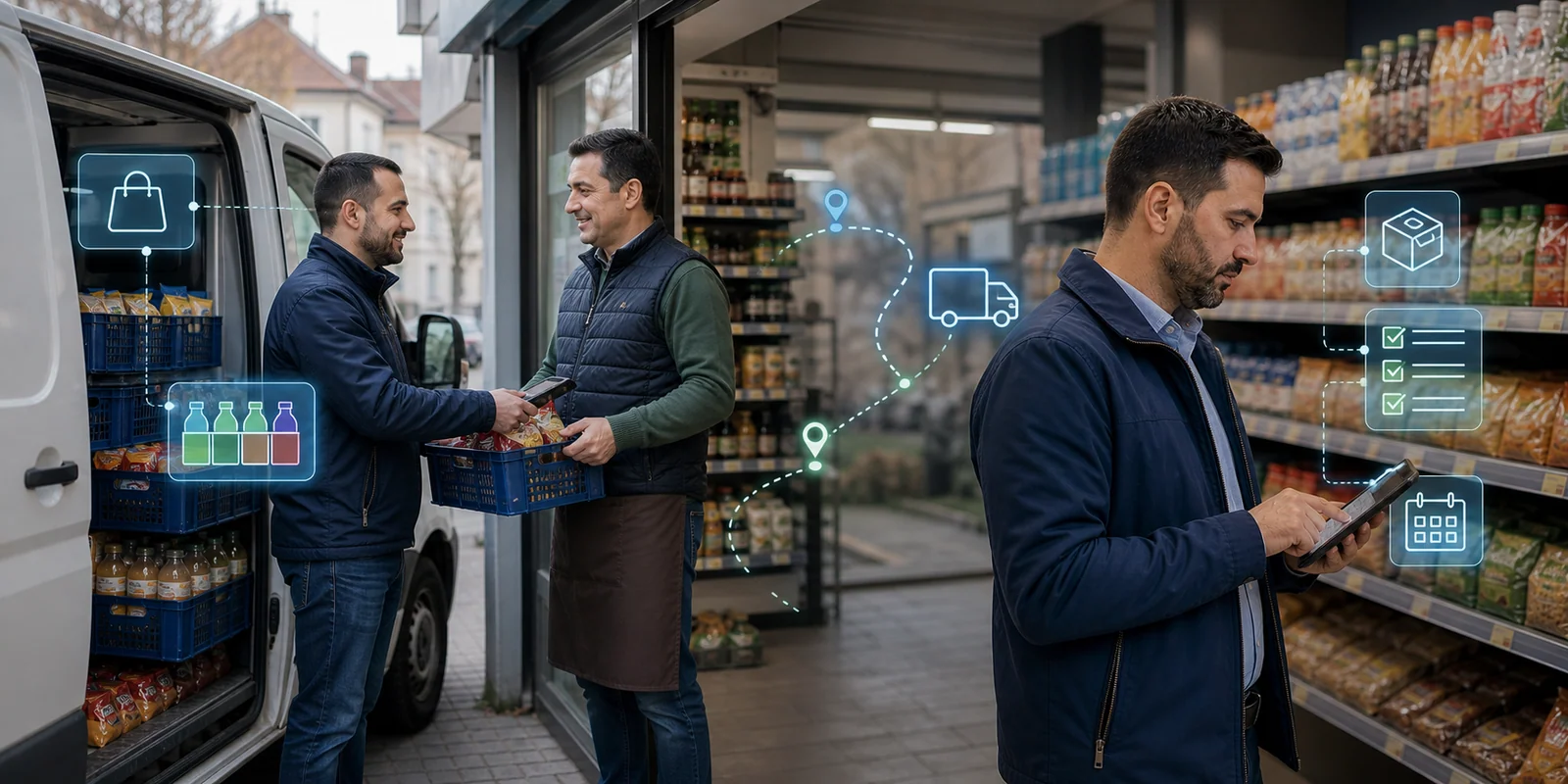
But an FMCG route carries more tasks:
- sales;
- delivery;
- merchandising;
- order taking;
- cash collection;
- price check;
- promo execution;
- shelf image;
- claim handling;
- relationship management.
One store may be farther away, but have high turnover, an active promotion or out-of-stock risk. Another may be close, but have low potential and a small order.
Route optimization should ask:
Which route creates the best outcome under the current constraints?
The main constraints in FMCG routes
1. Time windows
Stores have hours when the visit actually makes sense.
Some customers do not accept deliveries during specific hours. Others have the owner present only in the morning. Some have heavy customer traffic when the sales rep cannot calmly take an order.
A route that is short but arrives at the wrong time is not optimal.
2. Visit priority
Not all customers have the same value.
Priority may depend on:
- revenue;
- potential;
- churn risk;
- active promotion;
- must-visit agreement;
- OOS risk;
- unpaid invoice;
- strategic account status.
Outlet segmentation is the foundation of good route logic. Without segmentation, the system treats a kiosk and a key account the same way.
3. Service duration
A visit is not just a stop.
One store may require 5 minutes. Another may require 35.
Time depends on:
- customer size;
- order;
- shelf tasks;
- number of categories;
- image recognition scan;
- claim;
- cash collection;
- promo setup;
- conversation with the manager.
If the system plans 20 visits without real service time, the route will look good only on a map.
4. Capacity
For delivery routes, capacity is physical:
- volume;
- weight;
- temperature requirement;
- pallets or crates;
- vehicle capacity;
- unloading time.
For sales routes, capacity is human:
- working hours;
- maximum number of meaningful visits;
- administrative time;
- travel fatigue;
- visit quality.
In both cases, overbooking leads to weak execution.
5. Order and delivery dependencies
In Van sales vs pre-sales, route logic differs.
In van sales, the route depends on stock in van.
In pre-sales, the route depends on order capture, warehouse picking and delivery schedule.
If route optimization does not understand this process, it may optimize the wrong thing.
Sales route and delivery route are not the same
Sales route goals:
- right visits;
- better order;
- retail execution;
- relationship;
- issue closure;
- market intelligence.
Delivery route goals:
- on-time delivery;
- full fill rate;
- low cost per delivery;
- capacity utilization;
- reliable proof of delivery.
Sometimes the same person does both. Sometimes they are separate teams.
Route optimization should support this difference. Otherwise, the system may reduce kilometers while damaging sales.
Visit frequency is part of optimization
Today's route cannot be planned well if we do not know how often each outlet should be visited.
Visit frequency should depend on:
- store potential;
- sales velocity;
- OOS risk;
- delivery cycle;
- category;
- channel;
- promo calendar;
- execution problems;
- customer priority.
If a high-potential outlet is visited too rarely, the route loses sales. If a low-potential outlet is visited too often, the route loses time.
Route optimization should use execution signals
A good route does not come only from a map.
It should use:
- sales history;
- order potential;
- OOS risk;
- Realogram vs planogram;
- promo compliance gaps;
- price issues;
- unpaid invoices;
- claims;
- customer requests;
- delivery windows;
- team capacity.
For example, if Image recognition shows repeated out-of-stock in a high-potential store, that outlet can receive higher priority in the next route.
KPIs for route optimization
We should not measure only kilometers.
We should measure:
| KPI | Why it matters |
|---|---|
| Visits completed | plan execution |
| Visit quality | whether tasks were done |
| Sales per route | commercial result |
| Drop size | delivery/order efficiency |
| Time in store | real service time |
| Travel time | logistics efficiency |
| Missed high-priority visits | business risk |
| OOS reduction | execution impact |
| Cost per visit/delivery | cost-to-serve |
| Route adherence | discipline and realism of the plan |
If kilometers decrease but missed high-priority visits increase, the optimization is wrong.
AI and dynamic replanning
Static routes are easy to manage, but the market is not static.
AI can help with:
- risk-based visit prioritization;
- dynamic re-routing;
- next-best-visit;
- territory balancing;
- route capacity prediction;
- delivery exception handling;
- route productivity coaching.
AI agents can monitor exceptions: a customer closes, delivery is delayed, route capacity changes, a high-priority issue appears. But AI should not change the route without governance and business rules.
In short
FMCG route optimization is not shortest path.
It is a balance between:
- distance;
- time windows;
- service duration;
- customer priority;
- order value;
- stock and capacity;
- visit frequency;
- execution tasks;
- cost-to-serve;
- business impact.
The best route is not the one with the fewest kilometers.
The best route uses limited time and capacity where they create the greatest value.
Related in Optimasoft
- Route optimization optimizes routes by business constraints, not only distance.
- Field sales visit planning shows how meaningful visits are planned.
- Visit frequency explains how often different customers should be visited.
- Van sales vs pre-sales shows why route logic depends on the RTM model.
- OptimaSale manages sales routes, visits and tasks.
- OptimaDMS connects delivery, inventory and distributor execution.
Sources
Related articles