Promo compliance in FMCG: how to prove the promotion was actually executed
A promotion is not executed when it is planned in the system. It is executed when the shopper sees the right product, right price, right display and enough availability at the right moment.
A promotion can look perfect in the plan.
SKUs are selected. Price is agreed. Period is clear. POS materials are prepared. Display is planned. Sell-in is done.
But the shopper does not see the plan.
The shopper sees the store.
If the promo price is missing, the display is not installed, the product is out of stock or POS material is hidden, the promotion is not really executed.
That is why promo compliance should measure physical reality, not only planned activity.
Promo compliance is not one KPI
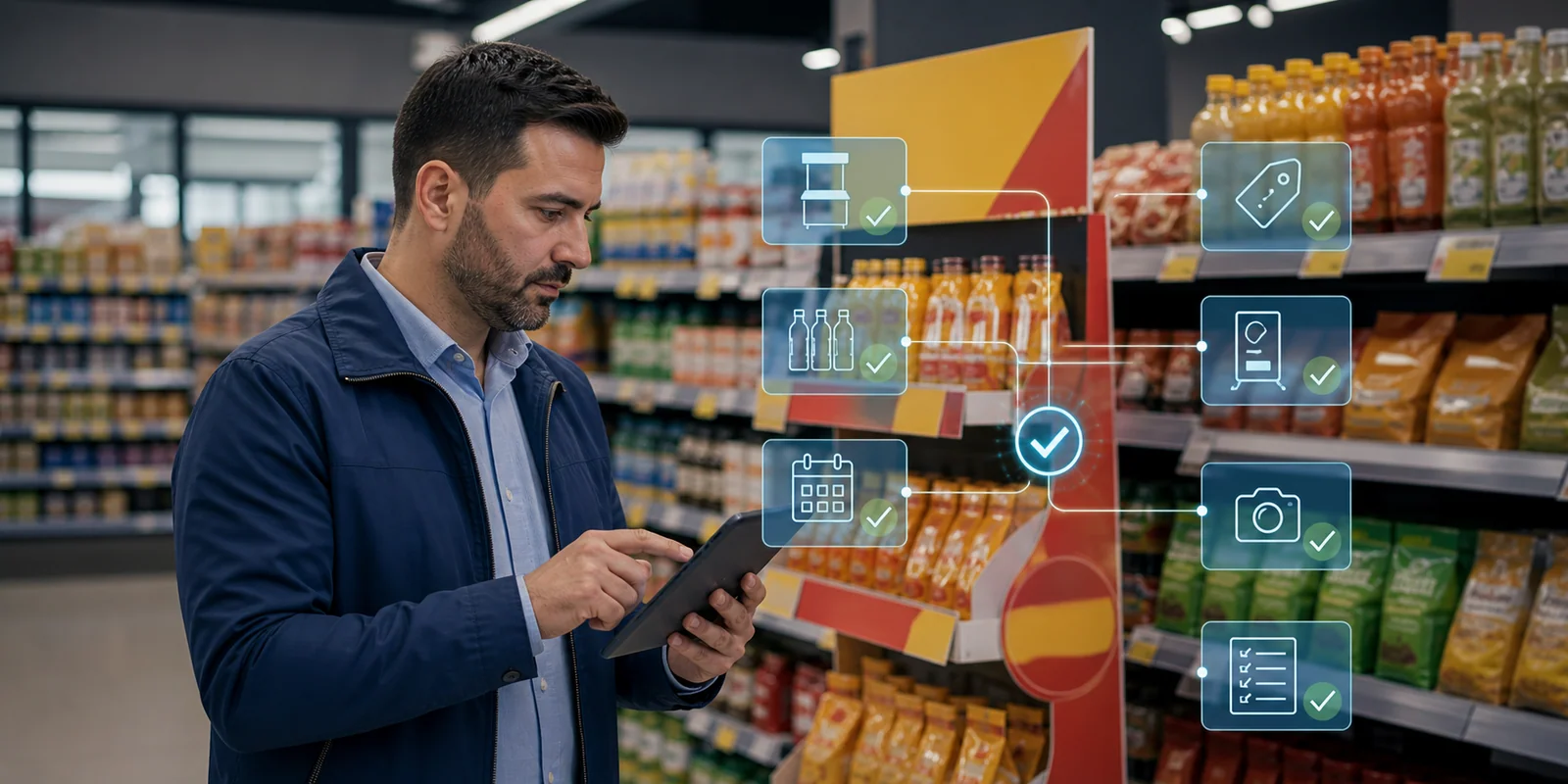
A promotion has several conditions:
- right product;
- right price;
- availability;
- display or secondary placement;
- POS materials;
- timing;
- enough quantity;
- evidence;
- action when there is a gap.
If one critical condition is missing, the promotion can lose effect.
First element: promo SKU availability
There is no promotion without product.
The business should measure:
- is the product on the shelf;
- is there enough quantity;
- is there OOS risk before the next visit;
- is promo SKU included in the order;
- is there stock gap in high-potential outlets.
AI Order Brain can help here because promotion should influence recommended order.
Second element: promo price
The wrong price can kill the promotion.
Promo price compliance should check:
- is the price placed;
- is it correct;
- is it visible;
- is there mismatch between system and shelf;
- is there store-level exception.
This is especially important in the first days of the campaign.
Third element: display and secondary placement
Many promotions are planned with additional visibility.
The business should verify:
- does the display exist;
- is it in the right place;
- is it full;
- are the right SKUs present;
- are competitor products present;
- is it visible to the shopper.
Asset Validator and image recognition are natural layers for this control.
Fourth element: POSM
POS material can be delivered but not installed.
Or installed in the wrong place.
Or hidden behind products.
That is why POSM compliance should measure physical presence and visibility, not "sent to outlet".
Timing
Promotion is time-sensitive.
A check one week after launch can be too late.
Good promo execution logic:
- pre-check before start;
- check in first 24-48 hours;
- replenishment check in the middle;
- closing check;
- post-promo analysis.
Field sales visit planning should account for promotion calendar, otherwise the route can be geographically right and commercially wrong.
Why promo compliance gets lost
A promotion rarely fails for one reason.
More often, several small deviations combine:
- sell-in was done, but the sell-out point has insufficient stock;
- POSM was delivered, but not installed;
- display was installed, but not in the agreed place;
- price is correct in the system, but wrong on the shelf label;
- the representative visited the outlet before the campaign, but not in the first days;
- store staff moved the product;
- competitor promotion took visibility;
- order quantity does not match expected uplift.
This means promo compliance should be managed as a root-cause process, not as a photo with a yes/no result.
If the system only says "promotion not executed", the team still needs to search manually for the reason. If the system says "promo price missing, display present, stock sufficient", the action is much clearer.
Trade spend leakage
Promotions cost money: discounts, bonuses, POSM, additional logistics, field visits, display fees and management time.
When execution is weak, the problem is not only missed sales. The problem is that trade investment has already been made, but does not reach the shopper.
That is trade spend leakage.
Promo compliance should therefore be viewed together with:
- planned spend;
- expected uplift;
- actual sell-out;
- compliance score;
- OOS rate;
- price compliance;
- issue closure;
- store priority.
Then management can see not only which promotion is "weak", but where execution has destroyed ROI.
Cross-functional ownership
Promo compliance is not only a field sales responsibility.
Different teams may own the issue depending on the problem:
| Problem | Likely owner |
|---|---|
| Shelf price is missing | sales rep / store contact |
| No stock | distributor / supply / order process |
| Display not installed | merchandiser / field sales |
| Wrong agreement | key account |
| POSM not delivered | trade marketing / logistics |
| Recurring regional problem | supervisor |
That is why the From data to action model matters. A promo signal should become the right task for the right owner, not just a red KPI.
Evidence and closure
The photo is important, but not enough.
There should be:
- photo;
- AI signal;
- issue status;
- owner;
- deadline;
- closure evidence;
- impact measurement.
If display is missing and the issue does not close, the compliance problem remains.
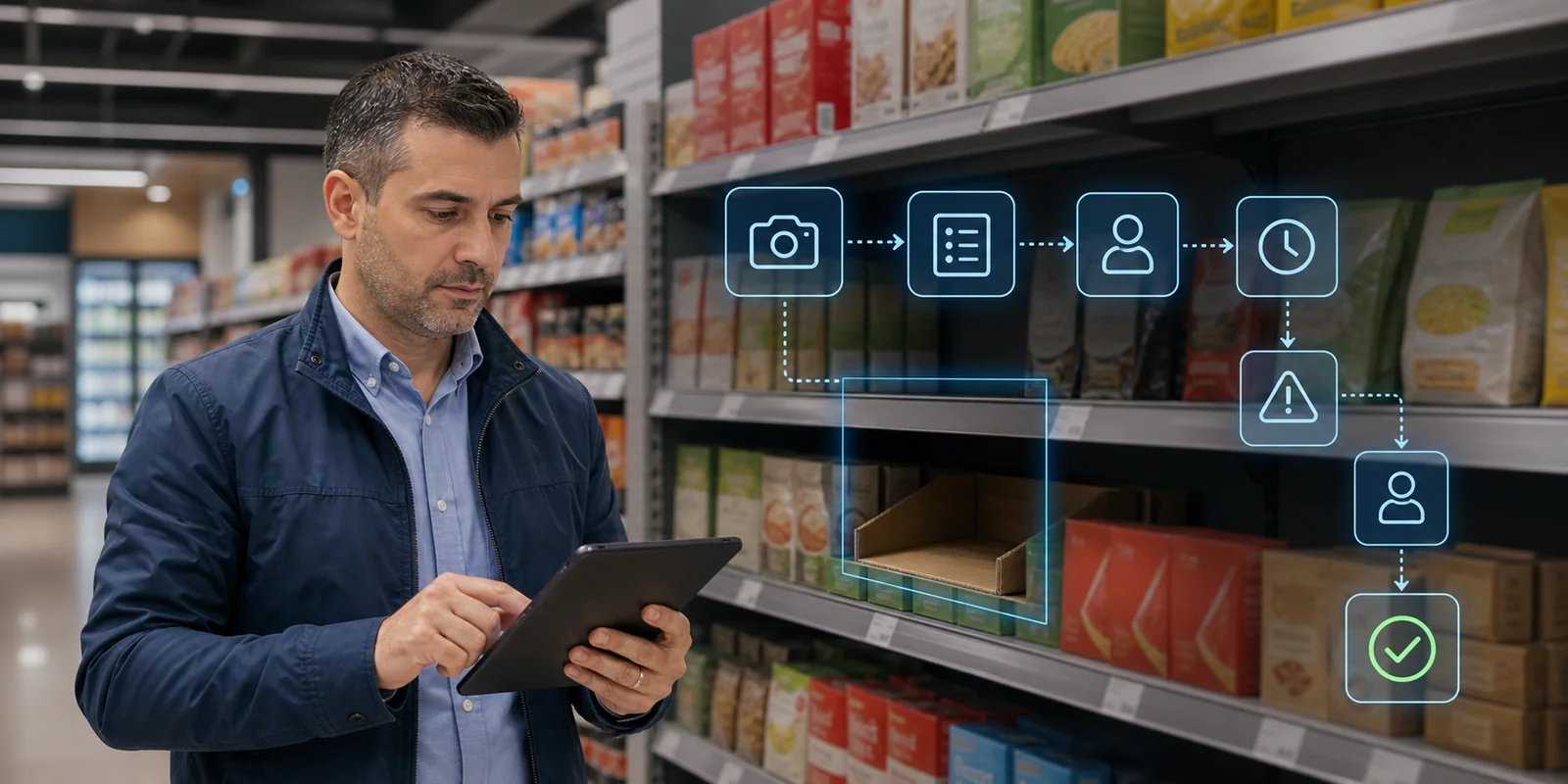
Workflow orchestration is critical for promo compliance because promotion has a window. If action is late, the opportunity is lost.
In short
Promo compliance in FMCG proves whether trade investment reached the shopper.
It should measure:
- promo SKU availability;
- promo price;
- display;
- POSM;
- timing;
- quantity;
- photo/AI evidence;
- issue closure;
- sales impact.
A promotion is not executed when it is planned.
It is executed when the shopper sees it and can buy the right product at the right price.
Related in Optimasoft
- Image recognition verifies promo execution from a photo.
- Asset Validator controls displays, POSM and secondary placements.
- AI Order Brain helps promotion influence the recommended order.
- Workflow orchestration closes promo issues with owner and deadline.
- Retail Execution KPI places promo compliance in the KPI framework.
Sources
Related articles